
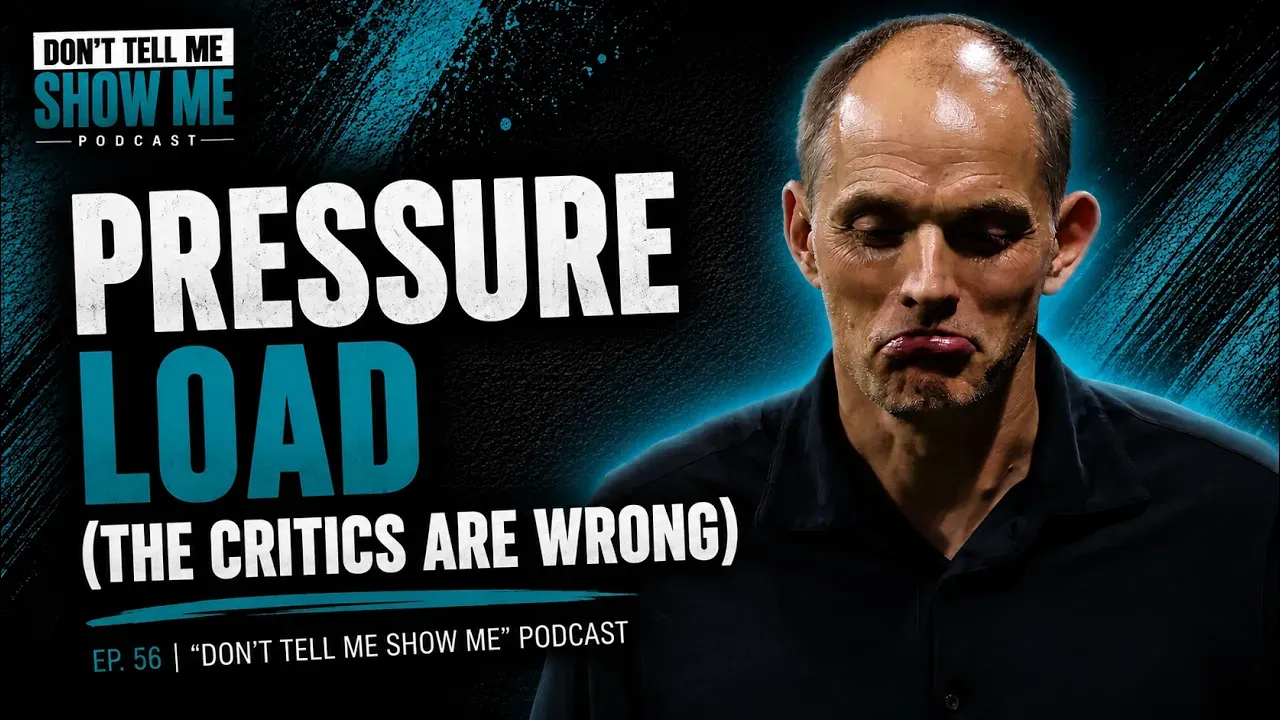
PRESSURE LOAD YOUR TEAM
A tactic that fails in a match usually didn't fail because it was a bad idea — it failed because it was never actually tested under pressure. Before you blame the plan, ask whether you ever gave your players the evidence to trust it.
When a big call goes wrong in a match, the instinct is always to relitigate the decision itself. Was it the right formation? The right substitution? The right style of play? But there's a question that gets skipped almost every time: did the players ever get the chance to prove — to themselves, and to you — that they could actually execute it under real pressure?
A good tactic and a tested tactic are not the same thing
You can have the smartest plan in the room and still watch it fall apart, because a tactic only works if the people running it believe, under fatigue and under threat, that they can pull it off. That belief doesn't come from a briefing. It comes from having done it before, when it was hard, and having it hold up.
Most teams — at every level, not just the top — get somewhere between "we talked about it" and "we walked through it passively" before they take a tactic into a real fixture. That's not preparation. That's exposure.
"One of the errors that I've seen too often at grassroots all the way through is coaches putting in a tactic that they haven't pressure load and tested enough in practice to give the confidence in the players that are going to execute it."
Reminding is not testing
There's a version of practice where you tell players what to do right before they do it: "Remember, we're pressing here, dropping there." That's useful for building the shape. But it tells you almost nothing about whether the tactic will survive contact with a real match, because in a game nobody reminds anyone of anything.
The more honest test is the one where you don't remind them at all — you just put them in the live situation and see whether the picture is still clear in their heads without a prompt. If it falls apart the moment the reminder disappears, you've found the gap before the scoreboard does.
- Walk-through with reminders tells you whether players understand the plan
- Live, unprompted repetition tells you whether they can execute it
- Only the second one tells you if it's ready for a match
When the problem isn't tactical at all
There's a trap that catches good coaches more than bad ones: reaching for a tactical fix because it's the tool you're most comfortable with, even when the actual problem is cultural or mental. A team that's tightening up, deflecting blame, or losing belief in each other doesn't need a cleverer shape. It needs a different conversation.
"I've fallen into this trap myself many, many times. I've imposed tactical solutions to a cultural problem."
Before you change the plan, it's worth asking plainly: is this a capability problem, a confidence problem, or a connection problem? They don't get fixed the same way, and a tactical adjustment aimed at the wrong one will look like it's not working — when really, it was never the right tool for the job.
Watch what happens right after something goes wrong
One of the clearest signals of where a team actually is culturally isn't the pre-season speech — it's the ten seconds after a mistake. Teams that scatter, point fingers, and physically drift apart after conceding are showing you something real. Teams that reconnect immediately — someone sprinting to the player who made the error, resetting them, moving on — have built something worth protecting.
"When we're doing the fault finding, when we're doing the blame, that is not helpful."
That reconnection behaviour is trainable. You can deliberately create moments of frustration in practice and coach how players respond to them, just as directly as you'd coach a set play.
Stretch, don't snap
None of this means throwing players into the deepest end you can find. There's a real line between testing someone and setting them up to fail, and it's worth knowing where it sits for the individual in front of you — not just the group.
Push a player past their break point and you don't get useful data, you get a negative experience that can undo confidence you've spent weeks building. Stop short of it, and you never actually find out what they can do. The skill is finding the edge of what someone can currently handle and working right at it, not past it.
What to do next session
- Pick one tactic or role you've only ever walked through with reminders, and test it without one
- Before your next difficult conversation about performance, ask whether the real issue is tactical, mental, or cultural — and check you're not defaulting to the one that's easiest for you
- Watch what your group does in the ten seconds after the next mistake in training. Don't intervene yet. Just watch.
The next time a plan doesn't survive a match, resist the urge to just draw up a new one. Ask first whether the old one was ever actually tested — or just hoped for.
Connect!
Join our mailing list to receive the latest news and updates.
We hate SPAM. We will never sell your data, for any reason.